

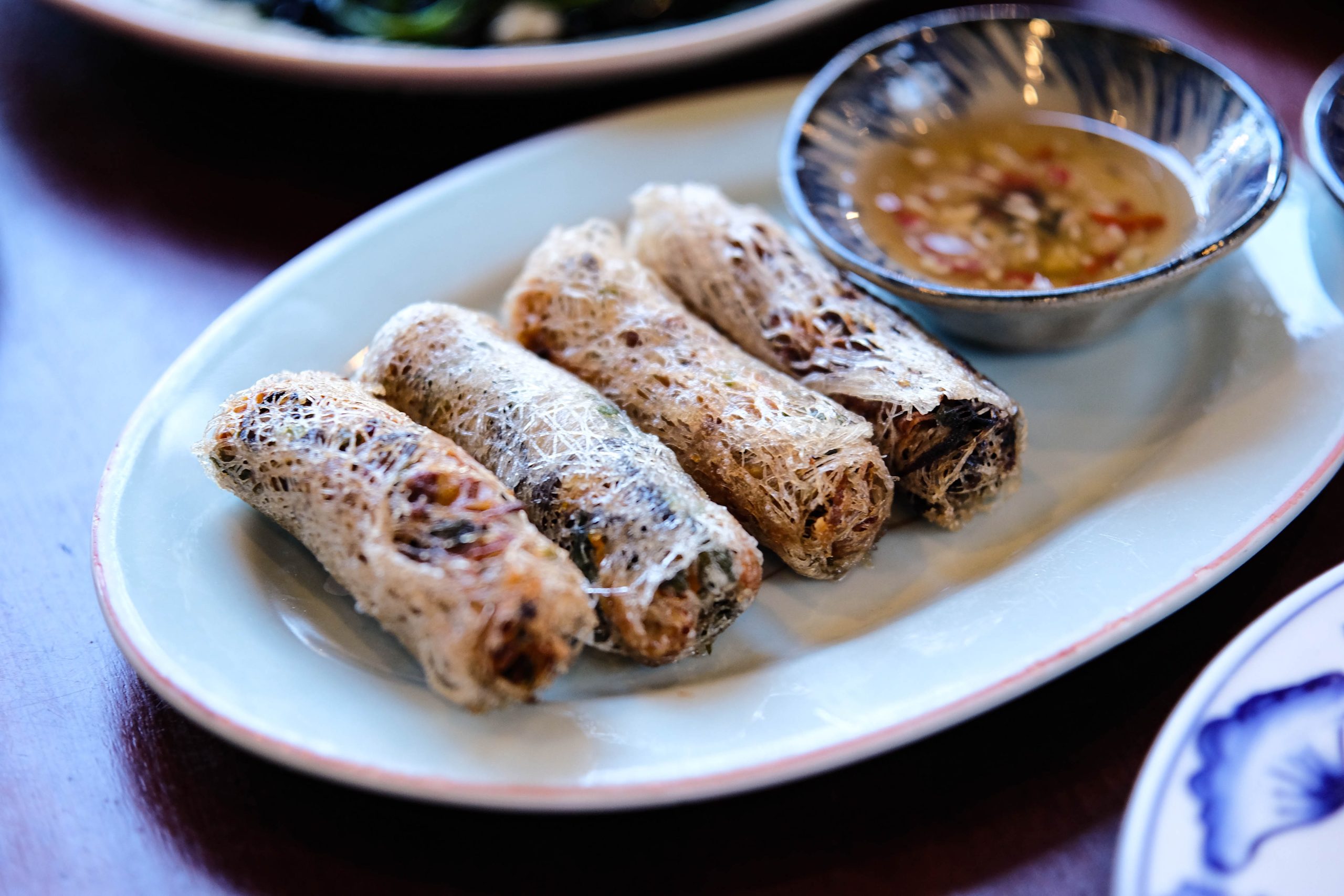
Few dishes hold the same revered status in Vietnamese culture as the Chả Giò—the golden, crispy fried spring roll. More than just an appetizer, this is the iconic centerpiece of virtually all special occasions, holidays, and family gatherings.
From the Tết Lunar New Year table to wedding feasts and anniversaries, Chả Giò symbolizes togetherness and prosperity. It’s the beloved comfort food that connects generations, a tradition passed down with care.
The Significance of spring rolls:
Representing Family Unity
Chả giò (Vietnamese fried spring rolls) is often prepared and enjoyed during family gatherings and reunion meals. For this reason, chả giò also symbolizes unity and family affection. When everyone participates in the process of making chả giò, from preparing ingredients, cooking, rolling the spring rolls, or frying, and then comes the time to gather and enjoy the meal together in a cozy atmosphere.
Traditional Cultural Value
Vietnamese spring rolls is regarded as a dish carrying traditional cultural value for the Vietnamese people. This is demonstrated through the creativity and ingenuity in the way simple ingredients like meat, vegetables, and spices are prepared to become a delicious and appealing dish.
Chả giò is widely used in parties and banquets. Especially during festivals and important occasions in Vietnamese life, people offer chả giò in worship to ancestors. This is also a way to show gratitude and pray for good luck, peace, and prosperity. Therefore, the act of making chả giò is also considered a traditional art passed down from generation to generation, contributing to the preservation and dissemination of the nation’s cultural values.
A Small Representative Part of Vietnamese Cuisine
Chả giò is considered one of the dishes representing Vietnamese culinary culture. It’s not just a delicious dish, but also a part of Vietnam’s heritage and culture. Over time, chả giò has become a distinctive culinary symbol of the country. This delicacy also attracts the interest of international tourists and has become a characteristic dish of Vietnam’s culture and cuisine.
Chả giò remains the same, retaining its traditional beauty through many generations. With creativity and development, Vietnamese cuisine has also adapted chả giò by adding a little flavor to suit a modern lifestyle. Nowadays, chả giò not only appears in traditional restaurants but is also served in fast food stalls and high-end restaurants.
Profound Significance
The immense significance of chả giò—symbolizing family bonding, unity, and traditional cultural values—has elevated it to an extremely important dish. It also showcases the creativity, essence, and rich flavor of Vietnamese cuisine. The traditional beauty of this dish has been continuously passed down through generations.
Exceptional Flavor and Texture
Chả giò possesses an especially wonderful flavor. This delicacy can be prepared with a variety of ingredients, such as pork, chicken, shrimp, or fish, combined with fresh vegetables and spices to create diversity and richness in both flavor and texture. This offers an enjoyable and multifaceted culinary experience for those who eat it.
Specialized Preparation Technique
Furthermore, the wrapping and frying process demands high-level skills to achieve that crispy, appealing outer layer. This preparation technique requires dexterity, sophistication, and patience. The meticulousness involved in every step of the cooking process makes chả giò a truly special dish, setting it apart in Vietnamese gastronomy.
Popularity and Versatility
Chả giò is considered a popular and beloved dish in Vietnamese cuisine. Not only does it appear in restaurants and eateries, but chả giò is also prepared at home, making it a common family meal. This demonstrates the widespread preference and importance of chả giò in Vietnamese gastronomy.
The ways to enjoy chả giò have also become more diverse. Many eat it with hot rice, bread, etc. However, the most special way is still to eat it with fresh herbs and a sweet and sour dipping sauce. This combination creates a unique and balanced flavor profile, satisfying the palate of the consumer. It’s no accident that chả giò is so favored. Its special flavor and profound significance have created this renowned dish in Vietnamese cuisine.
This particular recipe, inspired by the culinary expertise of Mate Food Recipe and Mate Restaurant in Hội An, features a unique, richly seasoned filling: succulent pork blended with the savory texture of wood ear mushroom, fresh carrot, celery, and the traditional inclusion of yam or taro. By carefully stir-frying the pork mixture until it is perfectly dry before rolling, we ensure every bite delivers a filling that is deeply flavorful and a wrapper that shatters with satisfying crispness.
Follow this guide to bring the authentic flavor of a Vietnamese celebration right into your kitchen!

Vietnamese Fried Spring Rolls recipe! “Cha gio chien” recipe. You will love it
Description
Vietnamese Pork Spring Rolls (Chả giò heo) are a quintessential traditional Vietnamese dish, a staple at family gatherings, holiday festivities, and even in daily meals. Featuring a delicate blend of fresh pork and signature spices, these spring rolls are more than just food; they embody the very spirit of reunion and strong family bonds.
Ingredients
Pork Filling
Vegetables and texture
Assembly & Frying
Instructions
-
Prepare and Cook the Pork Filling
Marinate: In a large bowl, thoroughly mix the ground pork with the garlic, fish sauce, oyster sauce, mushroom seasoning/MSG, five spice powder, and ground pepper. Blend all ingredients well until fully combined.
Stir Fry: Place the seasoned pork mixture into a dry wok or frying pan. Stir fry the pork without adding any oil over very low heat.
Dry Cook: Continue cooking and stirring until the meat is fully cooked and the liquid has completely evaporated, resulting in a dry filling. This step is crucial for crispy spring rolls, as excess moisture will break the wrappers. Set the pork aside to cool.
-
Prep the Vegetables
Rehydrate: Soak the chopped wood ear mushroom in hot water until soft (about 10–15 minutes). Drain and set aside.
Grate: Peel and grate the yam (or taro) and the carrot.
Chop: Finely chop the celery.
Combine Filling: Once the pork is cool, combine it in a large bowl with the soaked wood ear mushroom, grated yam/taro, grated carrot, and chopped celery. Mix all the ingredients well.
-
Roll the Spring Rolls
Place the softened rice paper on a flat surface. Spoon about of the filling mixture onto the bottom third of the wrapper.
Fold and Roll:
Fold the bottom edge up over the filling.
Fold both sides inward to cover the ends of the filling.
Roll tightly up to the top edge. The tighter the roll, the better the shape and the crispier the final product.
Repeat this process until all the filling is used. Place the finished rolls on a plate in a single layer, ensuring they don't touch to prevent sticking.
-
Fry to Golden Perfection
Heat Oil: Heat the cooking oil in a pot or deep pan. The ideal temperature is (or just below a medium-high setting, where a tiny bubble quickly forms when you dip a chopstick tip in).
Fry Gently: Carefully drop a batch of spring rolls into the oil.
Use chopsticks to gently hold and guide each roll for a few seconds as it fries to help it set its shape and prevent it from breaking apart.
Do not overcrowd the pan; fry in batches.
Cook: Fry the spring rolls until they are beautifully golden brown and very crispy (about 5–7 minutes, depending on the heat).
Drain: Remove the spring rolls with a slotted spoon and place them on a wire rack or paper towels to drain excess oil.

Nutrition Facts
Servings 4
- Amount Per Serving
- Calories 200kcal
- % Daily Value *
- Total Fat 10g16%
- Saturated Fat 3g15%
- Cholesterol 20mg7%
- Total Carbohydrate 10g4%
- Dietary Fiber 1g4%
- Protein 10g20%
* Percent Daily Values are based on a 2,000 calorie diet. Your daily value may be higher or lower depending on your calorie needs.
Note
- Dry the Filling (Pork) The most important step for crispy spring rolls is to stir-fry the pork mixture without oil until it is completely dry. Excess moisture (from the meat or vegetables) will soften the rice paper wrapper, causing it to tear or become soggy during frying. A dry filling is the secret to a shatteringly crisp shell.
- Roll Tightly, But Don't Overfill Use about 2 tablespoons of filling and ensure you roll the rice paper wrapper as tightly as possible. A loose roll can unravel during frying or absorb too much oil. Remember the folding technique: fold the bottom over the filling, then fold the sides inward, and roll up firmly.
- Mind the Oil Temperature (100∘C / Low Heat) The recipe specifically calls for the oil to be around 100∘C (a relatively low temperature for deep-frying). Start with a lower temperature to cook the filling through without burning the wrapper. Use chopsticks to gently hold and guide the rolls when first dropping them in; this helps them set their shape and prevents them from sticking together or breaking.